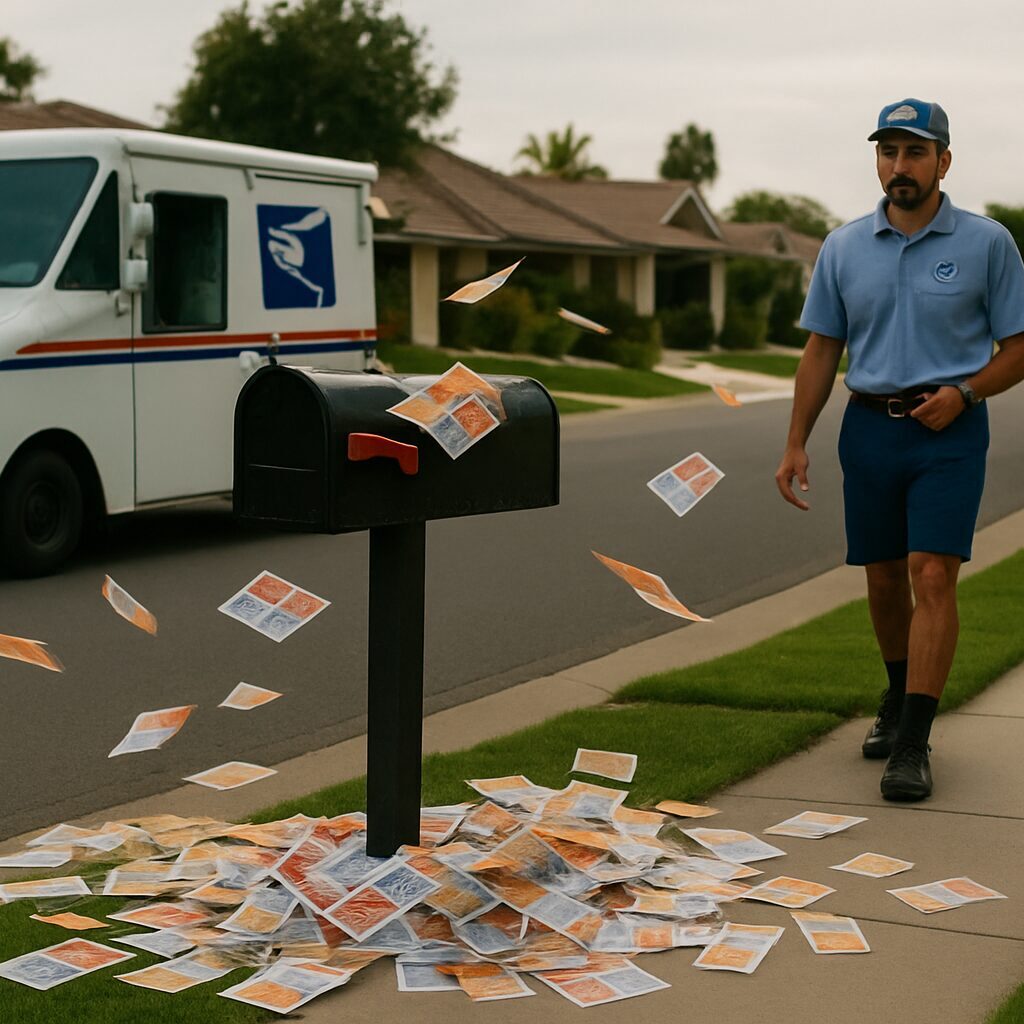
The Solution
Use the economics of bulk mail to drive change. If we reduce demand for this inefficient, wasteful medium, its unit costs rise and it loses viability. The simplest lever is reach: reduce the number of households that receive it. It starts by opting out...

The Base Economic Drivers of Bulk Mail
Bulk mail exists for one reason: it’s a cheap, high-volume direct-marketing tool. Sending millions of pieces keeps the unit cost low. Even with tiny response rates, it “works” because a small slice of recipients buys or is persuaded. That low conversion is offset by scale: if 1,000 flyers at a 3% response yield 30 purchases, then 10,000 yield ~300. The result is a self-reinforcing cycle—wasteful, but financially viable. Break the math—by lowering response rates or raising the required postage/format cost—and the cost per acquisition climbs, undermining the economics that fuel bulk mail.
Take Action
A 3-pronged grass roots approach to stopping Junk Mail
SAS = Stop – Alert – Share
Stop junk mail from reaching your mailbox by opting out. Use the tools available here
Alert your local elected officials to the problem
Share this website and our “Call to Action” flyer with friends, family, and others
What more can we all do to make a difference?
Switch to Paperless Billing
Most financial institutions, insurance companies, and service providers now offer paperless options. Choosing digital statements is one of the simplest and most effective ways to reduce junk mail—and your impact matters.
Why Make the Switch?
Reduce your paper waste and mailbox clutter
Increase privacy and minimize identity theft risks
Help reduce deforestation and preserve natural resources
Access your statements from anywhere, anytime
Contribute to a smarter, digital-first communication model
“Paperless billing is a modern solution to a very old problem. By making the switch, you not only simplify your life but help shift the system away from wasteful practices.”
— Phase 1: SAS Report
Use USPS Informed Delivery
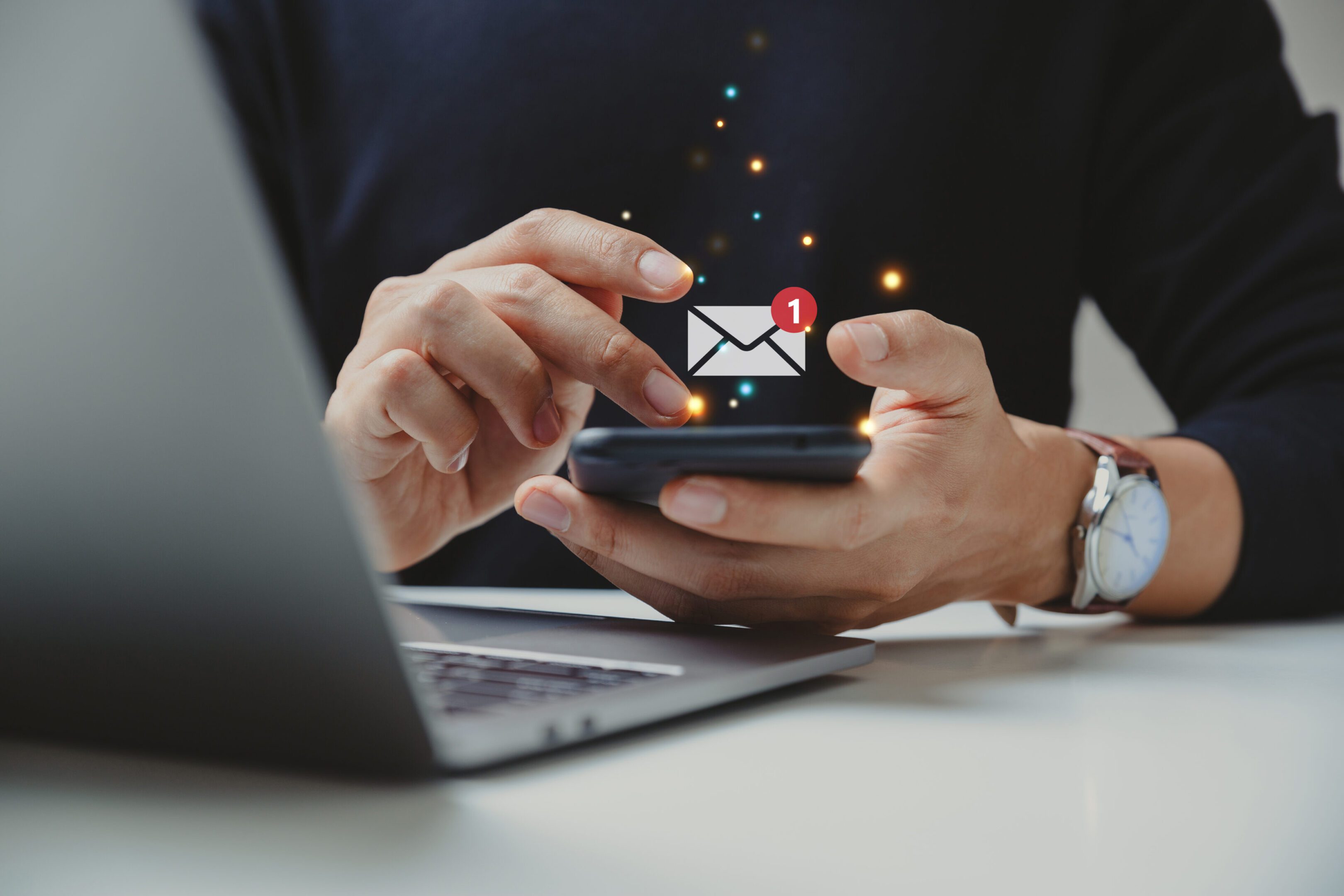
USPS Informed Delivery lets you see a digital snapshot of your incoming mail before it reaches your mailbox—giving you the power to monitor, manage, and minimize junk mail before it piles up.
While it won’t block unsolicited mail yet, it offers valuable insight and control. You’ll know what’s coming, so you can decide what matters—and what’s just waste.
Benefits of Informed Delivery:
Identify unwanted marketing mail in advance
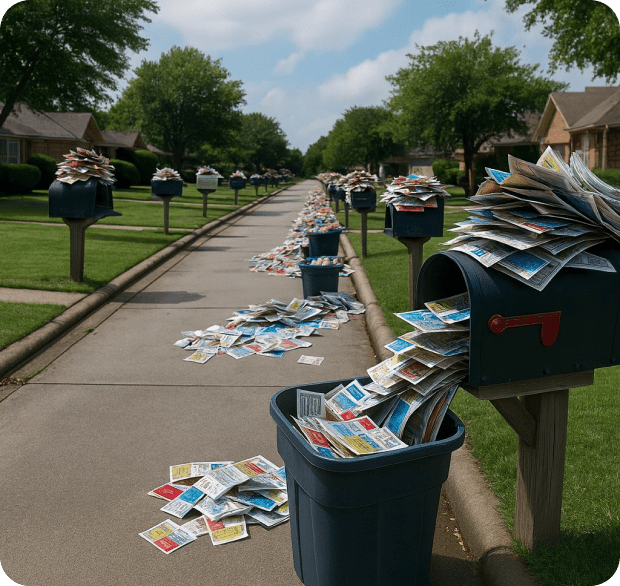
Avoid surprise junk buildup in your mailbox
Act faster to recycle, opt out, or file a complaint
Stay in control from your phone or inbox
Start building a habit of mail mindfulness
“Until opt-out systems are streamlined nationwide, awareness tools like Informed Delivery give households a tactical advantage in the fight against junk mail.”
— Phase 1: SAS Report
Advocate for Smarter Mail Policies
Support Long-Term Solutions
Is there anybody out there that actually believes we need a 6 day postal delivery protocol? Junk mail is not just annoying—it’s subsidized. Real change requires policy reform. Here’s how you can help:
End unfair subsidies: Push for pricing transparency between first-class and bulk mail.
Promote centralized delivery: Reduce last-mile delivery waste and emissions.
Support a 3-day delivery model: Fewer delivery days = fewer emissions and costs.
It’s time to rethink whether a six-day postal delivery system truly serves the public—or simply sustains outdated practices.